When this is the right measure
If your pointing is failing, your chimney stacks are shedding mortar, or cement repairs are spalling the faces off old bricks, the masonry needs lime — and the best moment is when a scaffold is already up for a re-roof or external wall insulation. Timber cladding enters the picture when an externally insulated wall wants a warmer, more architectural face than render: street-facing elevations, gables, and houses whose existing cladding is already the character to preserve.
How we do it
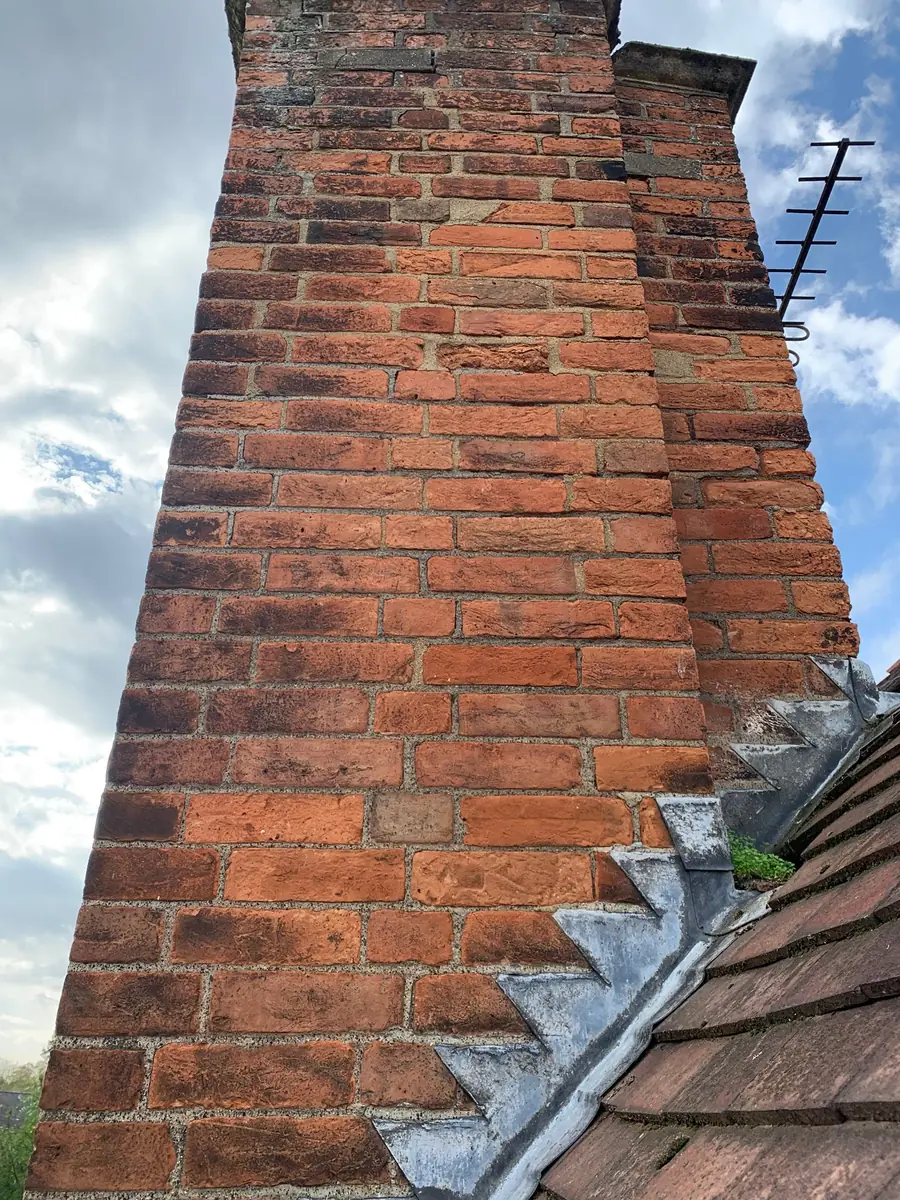
Chimneys and lime, the Church Way way. On a detached 1920s house on Church Way, in the Iffley village conservation area, the re-roofing scaffold made all four brick chimneys reachable — so all four were repointed in non-hydraulic lime mortar, the soft, breathable mortar the bricks were laid in, which sacrificially protects the brick rather than the other way round. Defective bricks were cut out and replaced, chimney pots repaired, and clay mushroom cowls fitted to the disused flues to keep rain out while letting the stacks ventilate. The rainwater goods were cleared, repaired and repainted in the same mobilisation. Inside, redundant chimneys are part of the airtightness plan: on St Margaret's Road in North Oxford the four disused flues were draught-sealed, with the old kitchen chimney blocked and lined with insulating board.
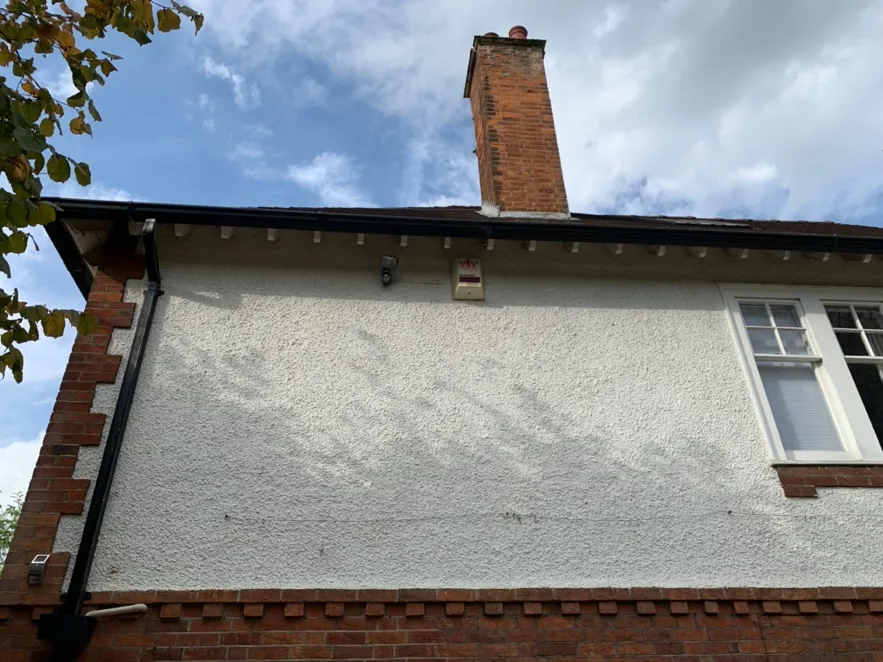
Lime as a system, not a patch. Lime runs through our external and internal work alike — parge coats levelling masonry, lime adhesives bedding insulation boards, lime plasters as the breathable air-control layer, and lime mortars outside. External brickwork on our solid-wall projects is prepared the same way: impermeable paint and cement pointing stripped back to bare brick and repointed in lime where needed, so the wall can dry outwards as it was built to. Why breathability matters is covered in our guide to wood fibre, cork and lime.
Timber cladding over external insulation. At Hilltop Gardens we produced a design that shows the approach: external wall insulation to all walls — above the damp-proof course and carried below it to ground level — with cedar cladding as the finish to the front elevation and silicone render to the rear. The specification called for a BBA-approved insulation system (EPS and rockwool both quoted, with wood fibre or stone wool at the DPC zone and XPS below to ground level), self-coloured silicone or lime-based render, and thermally broken fixings for pipes and cabling so no bracket bridges the insulation. Warranty requirements were written into the specification: 10-year workmanship and 25-year manufacturer cover.
What it pairs with
This work naturally rides with re-roofing (the shared scaffold), external wall insulation (the layer the cladding finishes), internal wall insulation (the same lime system inside) and airtightness (sealed flues and penetrations).
Proof
At Church Way, Iffley, the four repointed chimneys stand over a salvaged clay-tile roof on a conservation-area house whose whole envelope we rebuilt under one contract — every visible surface repaired like-for-like, in lime. Read the full case study.
Questions we're asked
Why repoint in lime rather than cement?
Because lime is the mortar these buildings were laid in, and it protects the brick rather than the other way round. Non-hydraulic lime is softer and breathable — it weathers sacrificially so the bricks do not, and it lets moisture escape through the joints. Cement pointing on old brickwork traps moisture and spalls the brick faces off.
What do you do with chimneys that are no longer used?
Keep them weathertight and breathing. At Church Way in Iffley, disused flues were fitted with clay mushroom cowls — keeping rain out while letting the stacks ventilate — while the four chimneys were repointed in non-hydraulic lime with defective bricks cut out and replaced and the pots repaired. Inside the house, redundant flues are draught-sealed as part of the airtightness works.
Can external insulation be finished in timber instead of render?
Yes. At Hilltop Gardens we specified cedar cladding over the external wall insulation to the front elevation with silicone render to the rear — a BBA-approved insulation system beneath both finishes, with thermally broken fixings for pipes and cabling so nothing bridges the warm layer.
Is this work done as part of a bigger project or on its own?
Both. Chimney and lime work is most economical while a scaffold is up for a re-roof or wall insulation — one mobilisation covers everything the scaffold reaches — but repointing, chimney repair and cladding also stand alone where the masonry needs it.